Qigong and Wing Chun: The Internal Energy Connection
Wing Chun is frequently discussed in terms of its external characteristics — the compact structure, the directness, the economy of motion, the centreline theory. These are real and important. But they represent only part of what Wing Chun is. At its highest levels, Wing Chun is an internal martial art — a system whose most sophisticated techniques depend not on physical attributes but on the development and application of internal energy. Understanding Qigong is essential to understanding Wing Chun at this level.

Qigong — 氣功 — translates to Energy Work or Energy Cultivation. Qi is the Chinese concept of vital energy or life force; Gong means skill, work, or cultivation. The practice encompasses a vast range of movement, breathing, and meditative techniques unified by a common purpose: developing the practitioner's ability to cultivate, circulate, and direct internal energy. It has been practised in China for several thousand years as a health discipline, a meditative practice, and a foundational training method for internal martial arts.
Historical Roots
The relationship between Qigong and Chinese martial arts is ancient and intimate. The internal arts of China — Taijiquan, Xingyiquan, Baguazhang — were explicitly founded on Qigong principles. Wing Chun emerged from the same southern Chinese martial arts tradition. Its origins place it in a cultural and martial context where Qigong understanding was assumed rather than explained. Practitioners of the era would have encountered Qigong ideas through their broader immersion in Chinese health and martial culture in a way that modern practitioners learning Wing Chun in isolation do not.
Qi in Wing Chun: Nim Lik and Yi
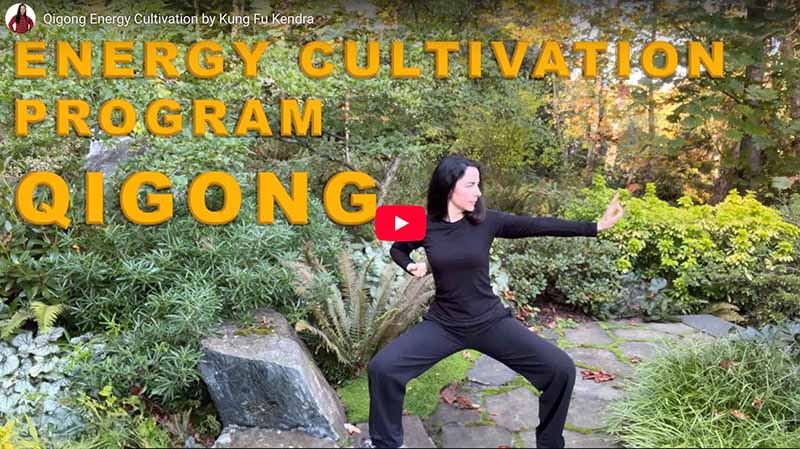
Nim Lik (念力) — Idea Force or Intent Force — is Wing Chun's central internal concept: the ability to generate and project force through focused mental intention, without relying primarily on muscular contraction. In Sil Lim Tao, the third section is practised slowly specifically to develop Nim Lik. This is a Qigong concept practised within a Wing Chun framework. Yi (意) — Intent or Will — describes the role of focused attention in guiding Qi and force. The traditional saying — Yi leads Qi, Qi leads Li (force) — describes a hierarchy in which mental intention precedes and directs energy, which manifests as physical force. Training Yi is Qigong training, applied to martial purpose.
What Qigong Develops for Wing Chun Practitioners
Qigong develops internal sensitivity — awareness of energy flow and tension patterns that is foundational to Chi Sau tactile sensitivity. It develops functional relaxation — the alert, responsive absence of unnecessary tension that Wing Chun requires. It develops rooting through standing practices like Zhan Zhuang. And it makes conscious use of breath in ways that support power generation, promote recovery, and maintain calm under pressure. Practitioners who come to Qigong through Wing Chun consistently find it changes how they feel in their empty-hand work in ways that forms practice alone cannot produce.
For practitioners looking to develop their Qigong practice with structured expert instruction, Sifu Kendra Mahon's Qigong Online Course covers the foundational practices, breathing techniques, and the connection between Qigong and Wing Chun's internal principles.