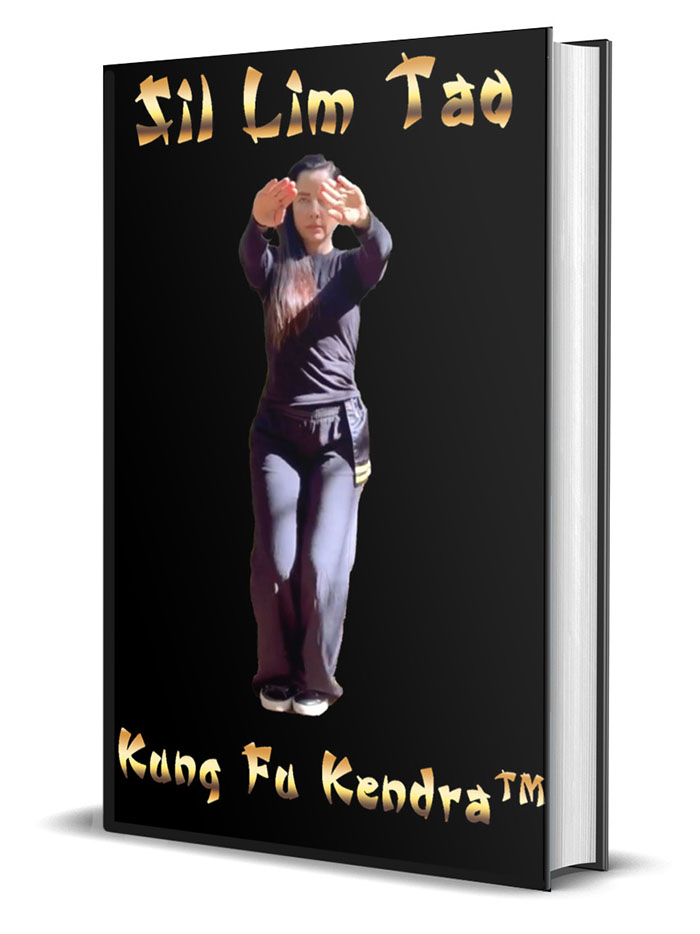
Sil Lim Tao: The Foundation of Wing Chun
Its name means "A Little Idea." For a martial arts form that serves as the foundation of an entire system, this seems almost deliberately understated. But the name of Wing Chun's first form is not modesty — it is precision. Sil Lim Tao is, in the most literal sense, the seed of an idea: a small, complete, foundational concept from which everything else in Wing Chun grows.

Understanding Sil Lim Tao properly — not just its movements but its purpose and principles — is the difference between a Wing Chun practitioner who builds correctly and one who accumulates years of practice while reinforcing fundamental errors. The form is the root. What grows from it reflects the quality of what was planted.
Origins and Historical Context
The origins of Sil Lim Tao are bound up with the contested and partly mythologised history of Wing Chun itself. The most widely accepted lineage traces the system to the legendary nun Ng Mui — a survivor of the Shaolin Temple's destruction during the Qing Dynasty — who distilled the most essential elements of Shaolin martial arts into a compact, efficient system designed to allow a smaller practitioner to overcome a larger one. Sil Lim Tao reflects a deliberate act of distillation: the stripping away of everything unnecessary to leave only what is essential.
Structure of the Form
Sil Lim Tao is divided into three sections. Section One establishes the fundamental hand techniques — Tan Sau, Fook Sau, Wu Sau — the building blocks of Wing Chun's defensive and offensive vocabulary. Section Two introduces additional techniques and develops flow between movements. Section Three is performed very slowly by design, developing Nim Lik — idea force — by training the mind's focused intent to generate and sustain internal energy through movement rather than momentum.
The Core Principles Encoded in the Form
Sil Lim Tao encodes Wing Chun's most important principles: elbow energy, which drives the hand rather than arm strength; structural integrity, where every position is functionally specific; economy of motion, where every technique travels the shortest effective path; and relaxation, because Wing Chun power is generated through relaxed structure, not muscular tension. A practitioner who tenses their shoulders during the form is training the wrong thing entirely.
Why Sil Lim Tao Is Never Finished
Among the most consistent observations of experienced Wing Chun practitioners is that Sil Lim Tao never stops revealing new layers. Practitioners who have trained for decades report continuing to discover new understanding in the form's most basic movements. Advanced practitioners do not graduate from Sil Lim Tao — they continue training it throughout their career, bringing progressively deeper understanding to the same movements.
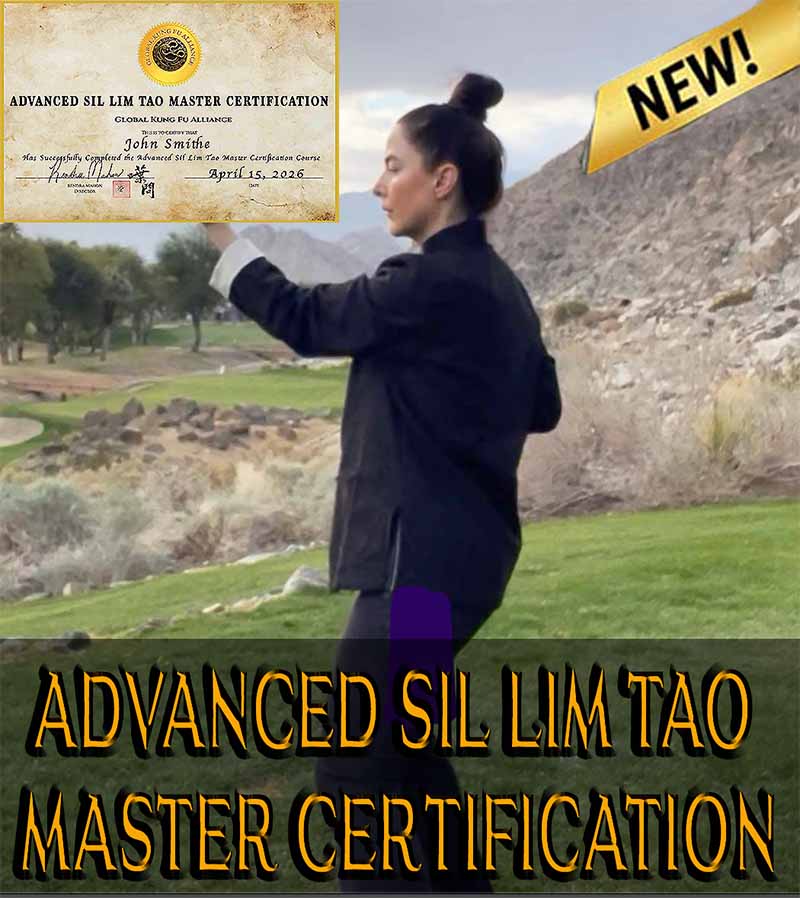
For structured expert instruction in Sil Lim Tao, Sifu Kendra Mahon's Sil Lim Tao Master Certification covers the complete form with step-by-step video instruction, personalised examination feedback, and official certification.