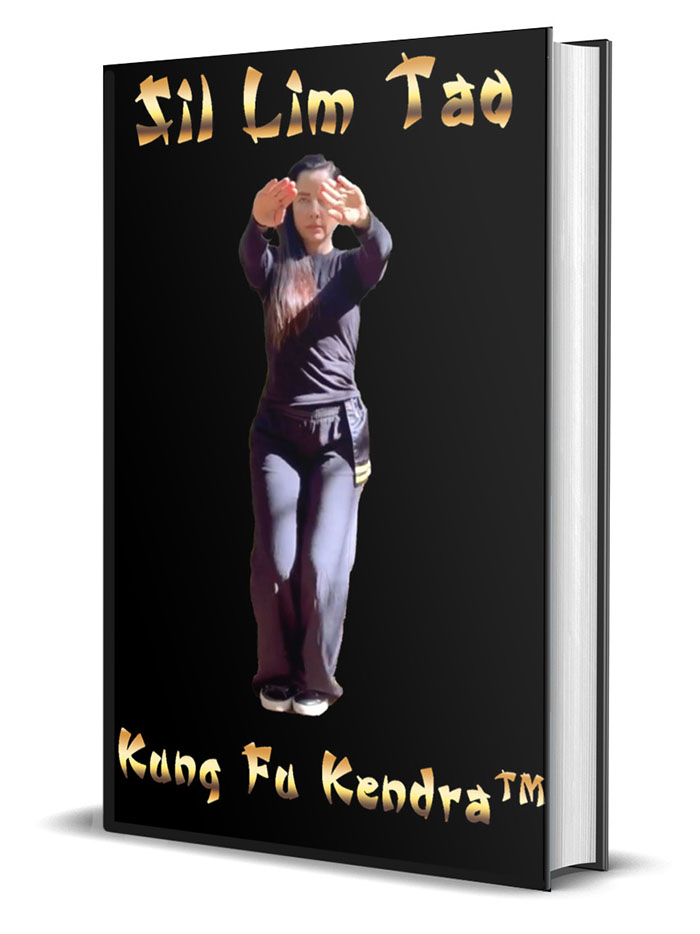
Ask most people where Wing Chun's power comes from and they'll point to the hands. Ask a Wing Chun instructor, and most of them will point somewhere else entirely — the elbow, the quiet engine driving nearly everything the hands are given credit for.
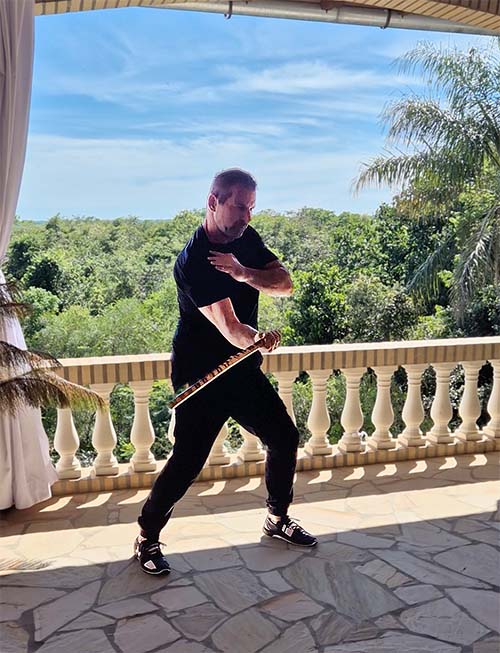
Why the Elbow Matters More Than the Fist
Wing Chun is often described as an economical art — small movements, close range, minimal wasted motion. That economy is only possible because the elbow, not the shoulder or the fist, does most of the structural work. Keeping the elbow forward and slightly inward, rather than flared out to the side, creates a straight structural line from the striking surface all the way back through the body's center of mass. That line is what allows a Wing Chun punch thrown from almost no distance to still carry real force — because the power isn't generated by swinging the arm, it's transmitted through a structure that's already aligned before the strike ever leaves.
Elbow Position and Structural Integrity
Every core Wing Chun shape — Tan Sao, Bong Sao, Fook Sao, the straight punch itself — is defined as much by elbow position as by hand shape. A raised or flared elbow breaks the chain between the strike and the body's mass, turning what should be a whole-body action into an isolated arm movement. This is one of the most common corrections instructors make with new students: the hand can look perfectly placed while the elbow quietly undermines the entire structure behind it. Fixing elbow position first, before refining hand shapes, tends to solve several technical problems at once.
Elbow-Driven Power vs. Shoulder-Driven Power
Many striking arts generate power through rotation and distance — the shoulder winds up, the hip turns, the fist travels a longer arc to build momentum. Wing Chun deliberately avoids that model, favoring proximity over distance. Because the art is built for close-range engagement, there often isn't room for a long, shoulder-driven swing. Elbow-driven power solves that problem by using structural alignment and a short, sharp release of tension rather than a big wind-up, allowing a strike to carry force even when thrown from inches away rather than feet.
Training the Elbow, Not Just the Punch
Wooden dummy work is where elbow power gets tested most honestly, because the dummy doesn't move out of the way and doesn't forgive bad structure. Repeated contact against a fixed arm exposes any collapse in the elbow almost immediately. Slow, deliberate chain punching — focusing entirely on keeping the elbow tracking a straight line rather than on speed — is one of the simplest ways to build this awareness. Once that structural habit is in place, speed and power tend to follow on their own, because the body has already learned the shortest, strongest path to the target.