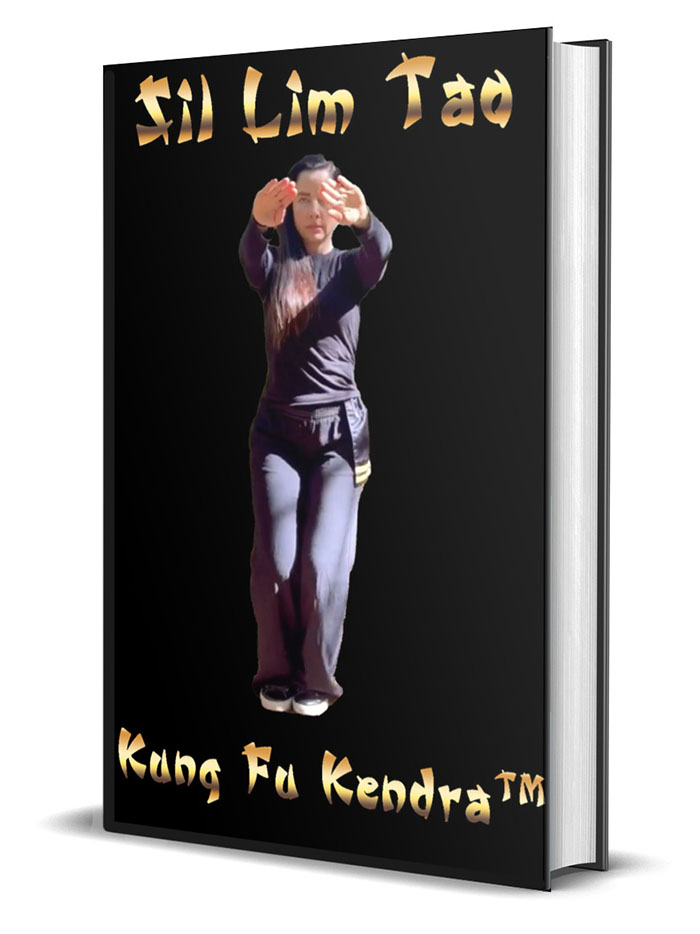
Book Feature: The Philosophy of Wing Chun by Sifu Kendra Mahon
Sifu Kendra Mahon, known as Kung Fu Kendra, opens The Way of Wing Chun series with a book about ideas rather than techniques. The Philosophy of Wing Chun: Simplicity, Balance, and the Straight Path sets out the principles that run through every form of the system, and asks what they mean off the training floor.
A Philosophy Hidden in Plain Sight
Wing Chun is often called a practical or scientific martial art, free of mysticism. The book’s starting point is that this practicality is a set of values in its own right. “The decision to strip away everything that is not essential is a statement of values,” Sifu Kendra writes. The philosophy, she argues, is hidden inside the techniques: in the low elbow, in the hand that goes straight for the center instead of chasing the opponent’s hand, and in the training partner who exposes your tension during chi sau.
Respectful of Every Lineage
Practitioners from different branches disagree about stance, footwork and history, and the book does not try to settle those debates. It focuses on the principles shared across nearly every lineage: centerline, economy, relaxation, simultaneous defense and attack, and sensitivity. Where Traditional Wing Chun adds something particular, such as its mobile footwork, its attention to controlling the opponent’s elbow and its strategy of working to the blind side, the author says so plainly.
From the Training Hall to Daily Life
Many of the book’s chapters end by carrying a principle into ordinary life. The centerline chapter recalls a lesson from her own teachers: if a train is coming down the track, you do not push it back, you step off the track. “Stepping off the track is not running away,” she writes. “It is refusing to stand where you cannot win, so that you can respond from where you can.”
Other chapters explore economy of motion as an “art of subtraction,” the traditional saying “receive what comes, escort what leaves,” the influence of Chan Buddhism and Daoism on southern Chinese martial arts (and how much of that influence is real rather than romantic legend), and the kuen kuit, the sayings that carry the art’s wisdom.
Who It Is For
The book is written for practitioners of any lineage, martial artists of other styles and readers who have never trained. It is not a technical manual, and the author is clear that nothing in it replaces a qualified teacher.

About the Author
Sifu Kendra Mahon, known as Kung Fu Kendra, has trained since 2005 and holds Master level (purple sash). She teaches Traditional Wing Chun as it was passed down to her by Master Brian Lewadny, who learned it from Grandmaster William Cheung. She is the author of 13 books and counting, including the ten-book The Way of Wing Chun series, and created the Become a Sifu Wing Chun Online Certification Course (10 levels, one payment, no monthly fees). Read what her students say on the Kung Fu Kendra reviews page.
Where to Get It
The Philosophy of Wing Chun: Simplicity, Balance, and the Straight Path is available on Amazon in Kindle and paperback: Kindle and paperback. It is also on Goodreads under Kung Fu Kendra and Kendra Mahon. See all of her books on kungfukendra.com.
More from Wing Chun Magazine
Lost in Translation: Has Hollywood Misrepresented Wing Chun’s Essence?
Women Who Defy: How Female Fighters Like Kung Fu Kendra Redefine Wing Chun
Listen on the Kung Fu Kendra Podcast
Hear Sifu Kendra Mahon (Kung Fu Kendra) talk about Wing Chun, her books and her students.
Editor’s note: Wing Chun Magazine is published by Sifu Kendra Mahon.