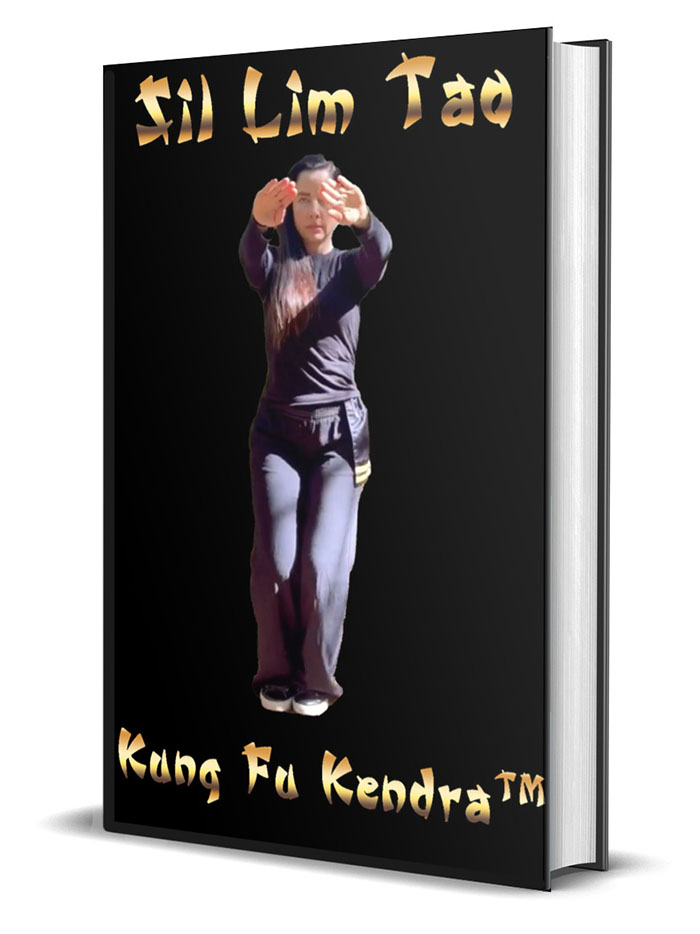
Book Feature: Ng Mui & Yim Wing Chun by Sifu Kendra Mahon
Sifu Kendra Mahon closes her Masters of Kung Fu series by going back to the very start: the two women whose story Wing Chun students hear before they have learned much else. Ng Mui & Yim Wing Chun: The Women Who Began It All is Book 9 and the last in the series. It will be available soon on Amazon in Kindle and paperback.
The Legend, Told as Legend
Here Mahon works almost entirely with tradition, and says so from the first pages. Part One tells the story much as it is taught in the Ip Man lineage: a Buddhist nun who escapes the destruction of a Shaolin temple and, in that lineage’s version, settles at the White Crane Temple on Daliang Mountain; a young woman and her father, living in exile nearby and selling bean curd; a bully who means to force her into marriage; a period of training in the mountains, often said to be one year; a challenge won through skill; and her marriage to Leung Bok-chau, who according to tradition named the art after his wife.
Part Two follows the chain through Leung Lan-kwai and the Red Boat opera world of Wong Wah-bo and Leung Yee-tai, men the book places on the border between legend and history, to Leung Jan, the Foshan physician with whom the story crosses into documented history, and on to Chan Wah-shun and Ip Man. The best-known version of the legend, Mahon explains, traces back to a short written account attributed to Ip Man and prepared in Hong Kong in the 1960s.
What Historians Say
Part Three sets out what scholars have and have not found. Historians, including Benjamin Judkins and Jon Nielson in The Creation of Wing Chun (2015), treat Ng Mui, Yim Wing Chun and the burning of Southern Shaolin as legend. The book links the burned-temple story to the Heaven and Earth Society of late eighteenth-century Fujian, shows how Ng Mui is claimed by several other southern styles, and reports, with a careful “if this research is correct,” work summarized by Judkins suggesting that she first appears in an 1890s novel as an antagonist of the Shaolin monks. Alternative origins, from the Cheung Ng theory to the Jee Sin lineages and the Red Boat theory, are presented as theories that cannot be confirmed.
Mahon is just as careful in the other direction. It is impossible to prove that Yim Wing Chun did not exist, she notes, since poor working women often left no records at all. “We can honour what we cannot prove. Yim Wing Chun may or may not have lived, but the qualities she represents are real.” Nor, in her view, does the art depend on the story: “An art that can stand on its own merits does not need its legend to be literally true.”
A Woman’s Name on the Art
Part Four reads the legend through Wing Chun’s principles: structure over strength, the centreline, softness and chi sau, and economy of motion, each tied to a young woman with little time and limited strength. Mahon writes as a female master who began training as one of very few women in the room, and she is frank that Wing Chun does not make size irrelevant. What it gives a smaller person, she writes, is structure, position, timing and sensitivity, and the book puts avoiding the fight ahead of winning it. She is equally clear that an art named after a woman belongs to everyone, men included.
On Screen and in the Training Hall
Part Five turns to legacy: women who carried the martial arts, from Mok Gwai-lan to today’s Olympians, and the 1994 film Wing Chun, directed by Yuen Woo-ping, with Michelle Yeoh as Yim Wing Chun, Donnie Yen as her fiancé Leung Pok-to and Cheng Pei-pei as the Abbess Ng Mui. The book calls it a lively mix of action and comedy that adds many characters and events not found in the legend, to be enjoyed as entertainment rather than history. A chapter on common myths and another on how to read a legend follow. Every chapter closes with a lesson and every part with a reflection workbook, and a timeline marks legendary dates as legend. In her conclusion, Mahon names what the story has done for women in the art: “It has told women that they belong in the training hall, not as guests but as heirs.”

About the Author
Sifu Kendra Mahon, known as Kung Fu Kendra, has trained since 2005 and holds Master level (purple sash). She teaches Traditional Wing Chun as it was passed down to her by Master Brian Lewadny, who learned it from Grandmaster William Cheung. She is the author of 13 books and counting, including The Way of Wing Chun and Masters of Kung Fu series, and created the Become a Sifu Wing Chun Online Certification Course. Read what her students say on the Kung Fu Kendra reviews page.
Where to Get It
Ng Mui & Yim Wing Chun: The Women Who Began It All is coming soon to Amazon in Kindle and paperback. Book 1 of the series, Bruce Lee: The Philosopher Behind the Fist, is available now. See all of her books on her Amazon author page and on kungfukendra.com.
More from Wing Chun Magazine
Lost in Translation: Has Hollywood Misrepresented Wing Chun’s Essence?
Women Who Defy: How Female Fighters Like Kung Fu Kendra Redefine Wing Chun
Listen on the Kung Fu Kendra Podcast
Hear Sifu Kendra Mahon (Kung Fu Kendra) talk about Wing Chun, her books and her students.
Editor’s note: Wing Chun Magazine is published by Sifu Kendra Mahon.