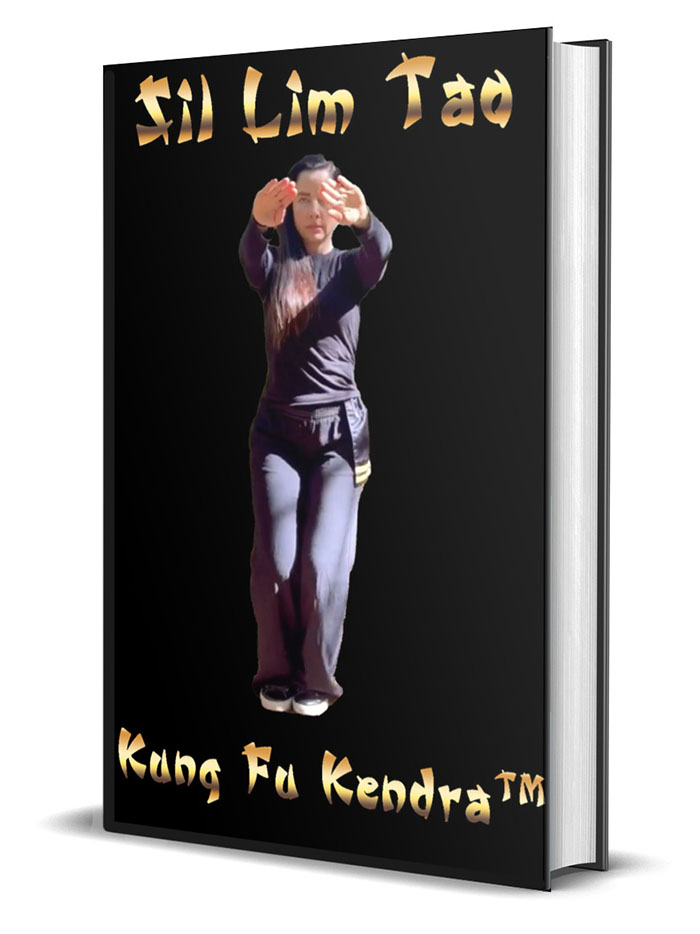
Book Feature: Ip Man, the Grandmaster of Foshan by Sifu Kendra Mahon
For the third book of her Masters of Kung Fu series, Sifu Kendra Mahon, known as Kung Fu Kendra, has turned to the grandmaster of her own lineage. Ip Man: The Grandmaster of Foshan follows Ip Man from his birth in Foshan in 1893 to his death in Hong Kong in 1972, and on through the worldwide family of students he left behind. It is coming soon to Amazon in Kindle and paperback.
Mahon teaches Traditional Wing Chun as it was passed down to her by Master Brian Lewadny, who learned it from Grandmaster William Cheung, one of Ip Man’s students in Hong Kong. She has written about Ip Man before, in The Life of Ip Man from her series The Way of Wing Chun, but this is a separate book. Here she follows the art itself: how it reached him, how he carried it to Hong Kong, how he taught it and how his students spread it.
Facts Before Legend
Although Ip Man lived until 1972, the book points out that his life is far from fully documented. Much of the record rests on the memories of his sons, Ip Chun and Ip Ching, and of his students, often set down decades later. Mahon relies on the most widely accepted facts and flags the rest. Sources disagree on whether he began training at about nine or about thirteen; the story of the high fee Chan Wah-shun is said to have named cannot be confirmed; and the war years remain the least documented part of his life. A chapter titled “What We Do Not Know” is given over to that silence.
The Teachers Behind the Teacher
Part One gives real attention to the people who shaped him. His first teacher was Chan Wah-shun, a Foshan money changer and student of Leung Jan, who, accounts say, taught in a hall belonging to the Ip family. After Chan stopped teaching, much of the boy’s training came from the senior student Ng Chung-sok, a name few outside Wing Chun know. Then, while studying at St. Stephen’s College in Hong Kong, the young Ip Man was defeated twice by an older man who turned out to be Leung Bik, son of Leung Jan, and went back to become his student. The book treats that choice as the turning point of his martial life.
From Refugee to Teacher
At the end of 1949, after the Nationalists lost the civil war, the former Foshan police officer left his home. He settled in Hong Kong in 1950, aged fifty-six, and that year began teaching members of the Restaurant Workers’ Association. Leung Sheung, Chu Shong-tin, Wong Shun Leung, William Cheung and a teenage Bruce Lee were among the students who followed, and in 1967 he and his students founded the Ving Tsun Athletic Association. Part Four turns to what he taught, from the stance and the three empty-hand forms to the wooden dummy, the weapons, chi sau, the centreline and relaxation. Mahon argues that his greatest change was to the way the art was shared rather than to its techniques. “Many people in history have been highly skilled and left nothing behind. Ip Man’s gift was that he passed his skill on, generously and patiently, to people who would pass it on again.”
On Screen and in History
Part Five sets the Donnie Yen films beside the record. There is no historical record of a public fight with a Japanese general, the British boxer and American adversaries are fictional, and the real Cheung Wing-sing died in Foshan in 1960, separated from her husband by the closed border. Mahon does not dismiss the films, describing them as entertainment that honours his courage and dignity. She approaches the differences between branches of the Ip Man family in the same spirit, seeing them as part of the richness of his legacy. Each chapter closes with a lesson and each part with a workbook, and a group guide, timeline and glossary complete the book. Her conclusion is plain: “The real Ip Man does not need the legend. He took an art that had been kept within a small circle in one southern city and opened it to the world.”

About the Author
Sifu Kendra Mahon, known as Kung Fu Kendra, has trained since 2005 and holds Master level (purple sash). She teaches Traditional Wing Chun as it was passed down to her by Master Brian Lewadny, who learned it from Grandmaster William Cheung. She is the author of 13 books and counting, including The Way of Wing Chun and Masters of Kung Fu series, and created the Become a Sifu Wing Chun Online Certification Course. Read what her students say on the Kung Fu Kendra reviews page.
Where to Get It
Ip Man: The Grandmaster of Foshan is coming soon to Amazon in Kindle and paperback. Book 1 of the series, Bruce Lee: The Philosopher Behind the Fist, is available now. See all of her books on her Amazon author page and on kungfukendra.com.
More from Wing Chun Magazine
Lost in Translation: Has Hollywood Misrepresented Wing Chun’s Essence?
Women Who Defy: How Female Fighters Like Kung Fu Kendra Redefine Wing Chun
Listen on the Kung Fu Kendra Podcast
Hear Sifu Kendra Mahon (Kung Fu Kendra) talk about Wing Chun, her books and her students.
Editor’s note: Wing Chun Magazine is published by Sifu Kendra Mahon.