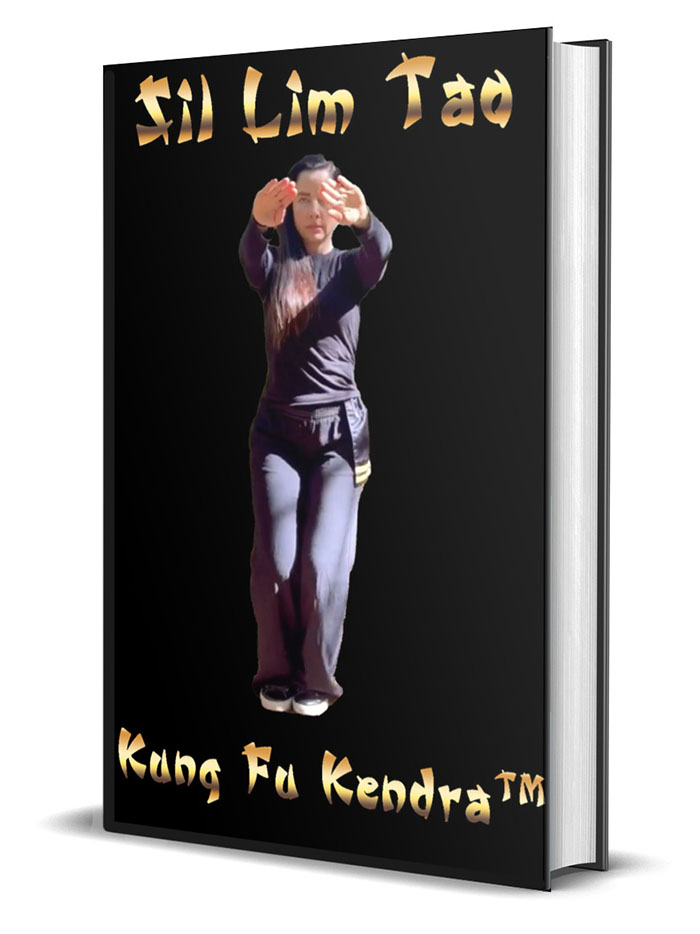
Book Feature: Huo Yuanjia by Sifu Kendra Mahon
For the fourth book of her Masters of Kung Fu series, Sifu Kendra Mahon, known as Kung Fu Kendra, leaves the southern world of Wing Chun behind and follows a frail farm boy from a village near Tianjin to the founding of Jingwu in Shanghai. Huo Yuanjia: The Fearless Master is coming soon to Amazon in Kindle and paperback.
Facts Before Legend
Mahon is upfront that the documented record is thinner than most readers expect. Huo Yuanjia was born in 1868 in Xiaonanhe, in Jinghai County, into a family that practised an art it called Mizong Yi, the Lost Track Art. He was sickly as a child, and according to the traditional account he watched his brothers train and practised in secret. Biographies place him in Tianjin from about 1896, first as a porter and later at the Huaiqing pharmacy, where he came to know Nong Jinsun, the friend who would draw him to Shanghai. The book flags each story that rests on tradition alone, from his acceptance by his father to the tale of the bandit and the monks.
The two challenges that made him famous get the same careful treatment. A Russian strongman in Tianjin around 1901 or 1902, and the performer known as Hercules O’Brien in Shanghai in 1909, both issued public challenges; Huo accepted, and in the best-supported accounts neither fight took place. Mahon argues this makes him a better example, not a lesser one: his reputation rested on courage and principle.
The Teacher Behind Jingwu
Popular accounts call Huo the founder of Jingwu, known abroad as Chin Woo. Drawing on historians including Andrew Morris, Brian Kennedy and Elizabeth Guo, the book explains that the association appears to have been created by a committee of young, educated Shanghai men, who hired Huo as its first chief martial arts instructor and later made him its spiritual founder. Mahon does not see this as diminishing him. “The organizers built the structure; he gave it a soul.” Part Five follows what they built after him: Chen Gongzhe’s gift of land for a new headquarters, Chen Shichao’s classes for women, the 1920 tour of Southeast Asia, and Chin Woo halls that still train today.
The Question of His Death
He died in Shanghai on September 14, 1910, aged forty-two, a few months after Jingwu was established. Chen Gongzhe’s memoir attributes his death to the coughing up of blood associated with his lung illness and does not mention poison. The poisoning story spread through Xiang Kairan’s 1923 novel Modern Chivalrous Heroes and later anti-Japanese feeling. Arsenic was reportedly found in his bones in 1989, but the book notes that arsenic compounds were used in traditional Chinese medicine and that he had advanced lung disease. “The honest answer is that we do not know exactly why Huo Yuanjia died.” Mahon also asks readers to remember the Japanese judo practitioners of the time as individuals, not villains.
A Wing Chun Perspective
Mahon is clear that she is not a Mizongquan teacher. She writes as a Wing Chun master from a different tradition, setting the wide-ranging footwork of the Lost Track Fist beside Wing Chun’s centreline and close contact. “Different arts express adaptability in different ways, but every effective art teaches us not to be frozen in one position.” The link to her own lineage runs through Bruce Lee, who played the fictional Chen Zhen in Fist of Fury, and through Jingwu’s public classes, uniforms and structured curricula, which historians argue shaped how southern styles came to be taught.
Lessons for Readers
Across 58 chapters in five parts, each chapter ends with a lesson and each part with a reflection workbook. The fourth part draws out the ideas his life came to represent: turning weakness into strength, courage while afraid, openness and martial virtue. A group guide, timeline and glossary round out the book.

About the Author
Sifu Kendra Mahon, known as Kung Fu Kendra, has trained since 2005 and holds Master level (purple sash). She teaches Traditional Wing Chun as it was passed down to her by Master Brian Lewadny, who learned it from Grandmaster William Cheung. She is the author of 13 books and counting, including The Way of Wing Chun and Masters of Kung Fu series, and created the Become a Sifu Wing Chun Online Certification Course. Read what her students say on the Kung Fu Kendra reviews page.
Where to Get It
Huo Yuanjia: The Fearless Master is coming soon to Amazon in Kindle and paperback. Book 1 of the series, Bruce Lee: The Philosopher Behind the Fist, is available now. See all of her books on her Amazon author page and on kungfukendra.com.
More from Wing Chun Magazine
Lost in Translation: Has Hollywood Misrepresented Wing Chun’s Essence?
Women Who Defy: How Female Fighters Like Kung Fu Kendra Redefine Wing Chun
Listen on the Kung Fu Kendra Podcast
Hear Sifu Kendra Mahon (Kung Fu Kendra) talk about Wing Chun, her books and her students.
Editor’s note: Wing Chun Magazine is published by Sifu Kendra Mahon.