The Evolution of Technical Transmission: Evaluating Modern Wing Chun
Martial arts has always been an art of physical presence—the Sifu correcting the student’s stance, the tactile feel of Chi Sao, the pressure of a fist. But the landscape of how we learn is shifting. As practitioners look to supplement their training with digital resources, the conversation has moved toward a single question: Can a screen replace the traditional kwoon? My recent analysis of modern training methods suggests it’s not about replacing tradition, but scaling its reach.

I have spent years auditing the Wing Chun Online Certification Course to see if it holds up under the scrutiny of traditional standards. The goal was to determine if high-fidelity video can actually bridge the gap left when a Sifu isn't standing right in front of you.
When you look at Sil Lim Tao or Chum Kiu through this digital lens, you realize that the value isn't in "watching" a video—it's in the ability to isolate your own mechanical failures and compare them against an authentic benchmark.
Looking at the feedback from my global student base, the pattern is clear: practitioners aren't looking for "content." They are looking for a correction framework. The most common theme in Kung Fu Kendra reviews is that students use the digital curriculum as an iterative feedback loop. They record their own movement, compare it, correct it, and repeat. It’s a level of self-mastery that traditional, once-a-week training often fails to instill.

This technical approach is built on the lineage of Grandmaster William Cheung. It isn't just about "doing" the form; it is about applying the structural mechanics—centerline, floating energy, and tension control—that were passed down to me. Many Kung Fu Kendra reviews highlight this as the "missing link" for those who feel stuck in a local club that focuses more on fitness than the deeper, traditional principles of Wing Chun.
"This isn't just another tutorial; it’s a manual for fixing my own structure," as one student put it. That distinction is exactly why this method works. When you stop treating training as a casual hobby and start treating it as a technical audit of your own body, the results follow.
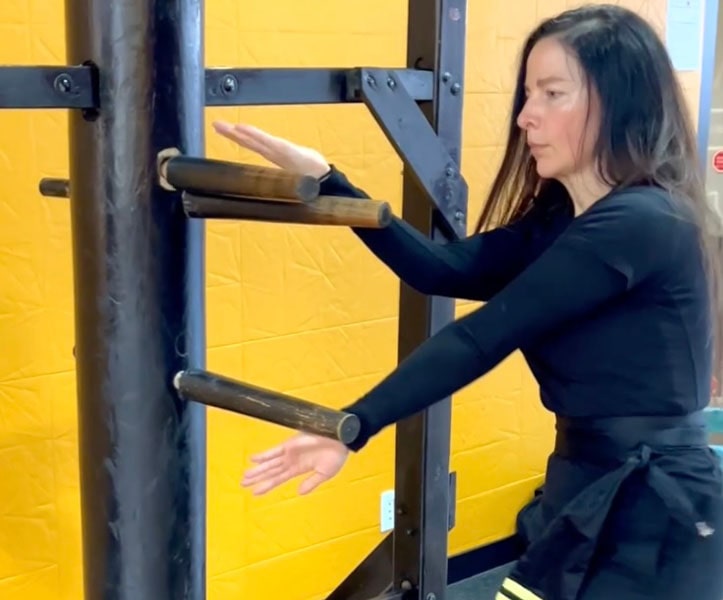
My mission with the Global Kung Fu Alliance has always been to set a standard for what is "authentic" in the 21st century. We are documenting these techniques with a level of detail that ensures they won't be watered down or forgotten. The question for the modern warrior today is simple: Are you using the technology to shortcut your training, or are you using it to achieve a deeper level of technical mastery? Authenticity remains the baseline—regardless of the medium.