
The Science Behind Chi Sau - Understanding Tactile Sensitivity
Chi Sau, or "sticking hands," represents one of Wing Chun's most distinctive training methods, yet many practitioners never fully understand the neurological principles that make it so effective. This exercise isn't merely about memorizing sequences or developing muscle memory—it's about rewiring your nervous system to process information through touch faster than your eyes can register visual cues. Recent studies in haptic perception have revealed that our brains can detect pressure changes in as little as 10 milliseconds, significantly faster than visual processing.
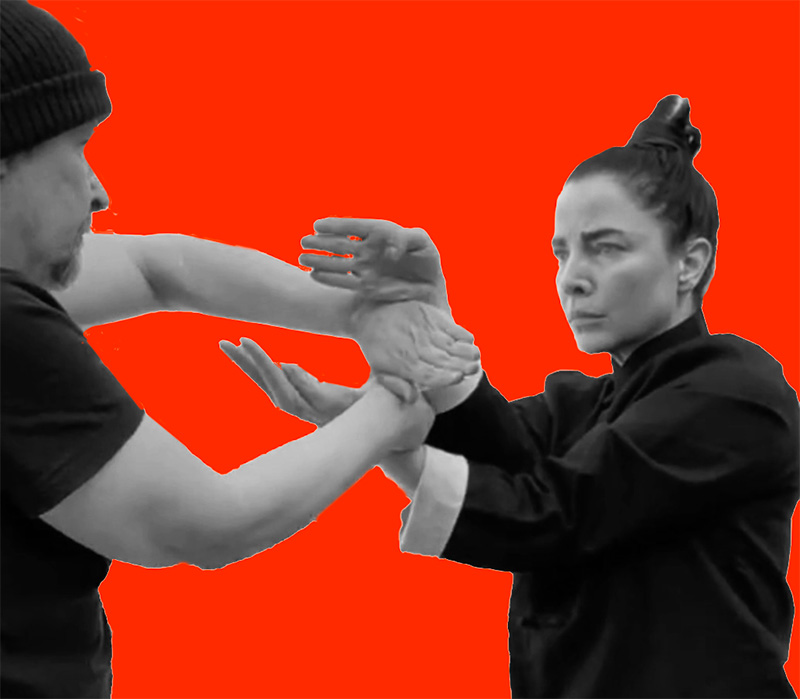
The sensitivity developed through Chi Sau training activates mechanoreceptors in the skin, particularly Meissner's corpuscles and Pacinian corpuscles, which specialize in detecting light touch and vibration respectively. When two practitioners maintain contact during Chi Sau, they're essentially creating a constant stream of tactile information. This allows for detection, prediction and response to an opponent's intentions before the movement fully manifests, giving Wing Chun practitioners an extraordinary ability to read and counter attacks.
Traditional Wing Chun wisdom emphasizes "listening" through the hands, and modern neuroscience confirms this isn't just poetic language. The somatosensory cortex, which processes touch sensations, occupies a disproportionately large area dedicated to the hands—nearly as much as the entire trunk of the body. Through consistent Chi Sau practice, practitioners essentially expand this neural real estate, creating increasingly detailed mental representations of tactile input.
The concept of "forward energy" or "forward intention" in Chi Sau also has a scientific basis in biomechanics and motor control. When both practitioners maintain contact and apply gentle pressure, they create what physicists would call a system in unstable equilibrium. Any disruption to this balance immediately provides tactile feedback about the opponent's movement and force vector, allowing for automatic reflexive responses that bypass conscious decision-making.
Common mistakes in Chi Sau often stem from over-reliance on visual information or attempting to consciously control every movement. The goal is not to think but to feel and respond. Many experienced practitioners can perform complex Chi Sau sequences while maintaining a conversation or with their eyes closed. This is because they've developed what researchers call "adaptive reflexes"—automated responses that emerge from practice rather than conscious thought.
Progressive training in Chi Sau should follow principles of motor learning: start slow to establish correct patterns, gradually increase speed as strength and complexity develop, and introduce unpredictability only after basic patterns become automatic reflexes. Many schools make the error of introducing speed too early, which causes students to tense up and rely on strength rather than sensitivity. The lightest touch that maintains connection provides the richest information—excessive force actually masks subtle movements and intentions.
The neuroplasticity developed through proper Chi Sau training extends far beyond martial applications. Studies of skilled musicians and surgeons show similar development of enhanced tactile sensitivity and fine motor control. Wing Chun practitioners who train Chi Sau consistently often report improved hand-eye coordination, better reflexes in daily activities, and even enhanced ability to work with their hands in non-martial contexts. The systematic training of the nervous system to process tactile information at extraordinary speed creates benefits that permeate all aspects of physical interaction with the world.
Understanding the scientific principles behind Chi Sau doesn't diminish its traditional importance—rather, it confirms the profound wisdom of Wing Chun's founders who developed this training method centuries before modern neuroscience could explain why it works. The integration of biomechanics, sensory processing, and motor learning in Chi Sau represents a sophisticated understanding of human physiology that continues to prove its effectiveness in modern practice. For serious practitioners, Chi Sau remains not just a training drill but a gateway to developing truly exceptional martial sensitivity and reflexive skill.