
The Psychology of Simultaneous Attack and Defense
Wing Chun's defining characteristic—the principle of attacking and defending in a single motion—isn't just a physical technique but a profound psychological strategy that reshapes how practitioners approach combat. Most martial arts systems teach defense as a prerequisite to offense: block first, then counter. This creates a mental framework of sequential thinking that, while logical, introduces delays and decision points that can be exploited. Wing Chun's simultaneous defense-attack principle eliminates this mental gap, creating combatants who don't distinguish between offensive and defensive modes.
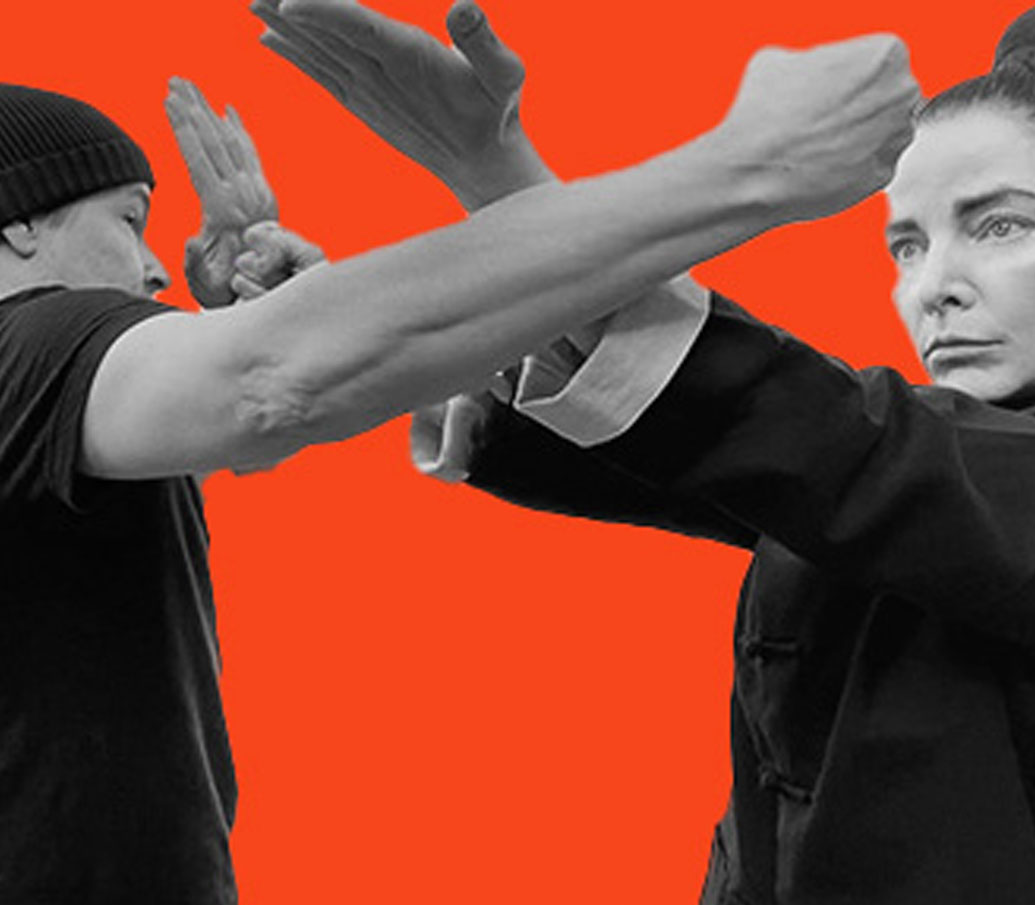
The psychological impact on an opponent cannot be overstated. When someone attacks you and you only defend, they receive confirmation that their aggression is working—you're reacting to them. But when successful defense is a necessary block because there's a punch toward them, aggressor and victim roles blur. Offense and defense become the same action where the aggressor discovers they need this new information. The attacker never experiences a clean offense; their attack immediately meets resistance and consequence. This is psychologically destabilizing and disrupts the aggressor's OODA loop—their ability to Observe, Orient, Decide, and Act.
This principle also addresses one of fighting's fundamental paradoxes: aggressive offense leaves you vulnerable. While attacking, you're necessarily committed to forward momentum, which means your defenses are lower. The simultaneous defense-attack philosophy solves this elegantly: your defense IS your offense. When you perform pak sau and punch simultaneously, the pak sau becomes the structure of your punch, and the punch becomes the kinetic commitment to the pak sau. This creates a psychological state where offense and defense aren't separate considerations—you're never doing one thing while hoping to do another—you're always fully committed to the moment.
The training required to internalize this principle extends beyond physical drilling. It requires rewiring your threat response. Humans are neurologically programmed with fight, flight, or freeze responses, and most martial arts training splits these into categories—fleeing through evasion, freezing through blocking and waiting, or fighting through dedicated attacks. Wing Chun trains a fourth response: continuous forward pressure that is simultaneously both offensive and defensive. This isn't natural and requires hundreds of hours of practice to override instinctive responses.
Chi Sau serves as the primary laboratory for developing simultaneous attack-defense, but only when practiced correctly. Too often, practitioners treat Chi Sau as taking turns: I defend, then we switch. Real Chi Sau should feel like both practitioners are always attacking and always defending simultaneously. Neither person is purely offensive or defensive at any given moment. This creates a unique energetic signature where relaxation and aggression coexist, which is exactly what makes Wing Chun most effective when applied to believe.
The concept challenges Western dualistic thinking, which categorizes actions as either/or rather than both/and. We're culturally conditioned to see attack and defense as opposites, as mutually exclusive activities. Eastern philosophical traditions, particularly Taoist thought emerging from unity of opposites, treats them as complementary aspects of the same action. For Western practitioners, learning simultaneous offense-defense often requires not just physical training but a fundamental shift in how they conceptualize conflict.
Understanding this psychological dimension transforms training. Instead of drilling techniques as separate offensive and defensive moves, every movement should be explored for its dual nature. A bong sau isn't just a deflection—it's simultaneously a structure that channels force while maintaining forward pressure. A tan sau isn't merely rising to intercept—it's creating an obstacle while the other hand exploits the opening. This mental framework turns every exchange into a puzzle of how to maximize both defensive coverage and offensive threat in a single action.
The practical application in self-defense situations cannot be overstated. Attackers rely on overwhelming force or surprise to freeze their victims. The simultaneous attack-defense response disrupts this dynamic immediately. Instead of experiencing a victim who tries to block and escape, the attacker encounters someone whose defensive response is itself an attack. This unexpected resistance, delivered with the same timing as the initial aggression, creates confusion and hesitation in the attacker's mind—the brief pause that allows escape or control of the situation.
For serious practitioners, developing true simultaneous attack and defense represents one of Wing Chun's highest achievements. It requires not just physical coordination but a complete psychological reorientation toward conflict. When successfully internalized, it creates martial artists who don't think in terms of separate offensive and defensive modes but who naturally respond to threats with integrated actions that protect while simultaneously advancing. This psychological unity of purpose, where attack and defense become indistinguishable, represents the essence of Wing Chun's approach to combat.