
The Dragon Pole: Wing Chun's Long-Range Weapon
Of Wing Chun's two traditional weapon forms, the Dragon Pole is the one that surprises people most. A system renowned for economy of motion and close-range efficiency — and yet one of its defining training tools is an eight-foot pole. The apparent contradiction dissolves the moment you understand what the Dragon Pole is actually teaching. It is not a departure from Wing Chun's principles. It is their most demanding expression.
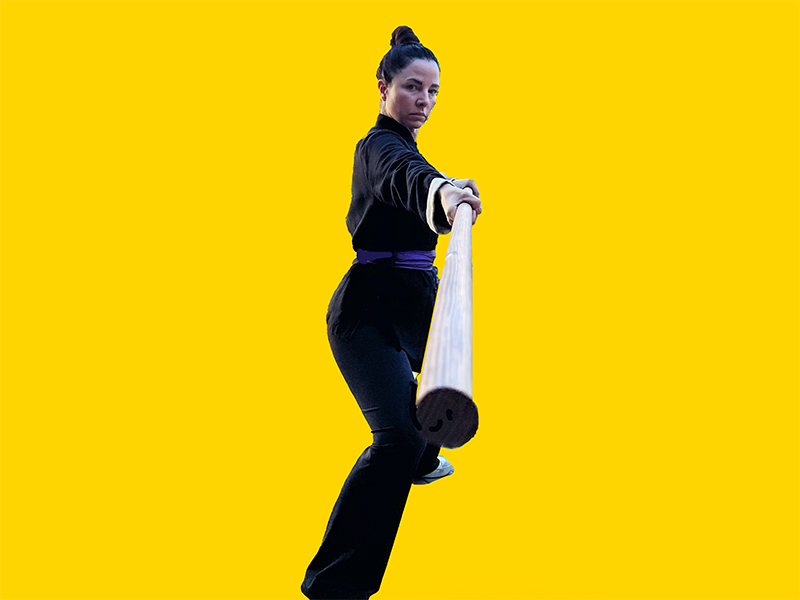
The Luk Dim Boon Gwun — 六點半棍 — translates directly to Six-and-a-Half-Point Pole. Six complete striking techniques and one half-technique: a retraction. That half-technique is telling. In Wing Chun, even the return is a movement with purpose, not an afterthought. The economy is absolute.
Origins: The Red Boats and the River Tradition
The pole form's history within Wing Chun is bound up with the Red Boat opera troupes of the Qing Dynasty. During the 18th and 19th centuries, Cantonese opera companies travelled the Pearl River Delta aboard distinctive red-hulled vessels that became a refuge for practitioners of banned martial arts and anti-Qing revolutionary activity. The long pole was a practical tool on these boats. Wing Chun practitioners adapted existing long-pole traditions into the Wing Chun framework, filtering the techniques through the system's core principles of directness, structure, and economy.
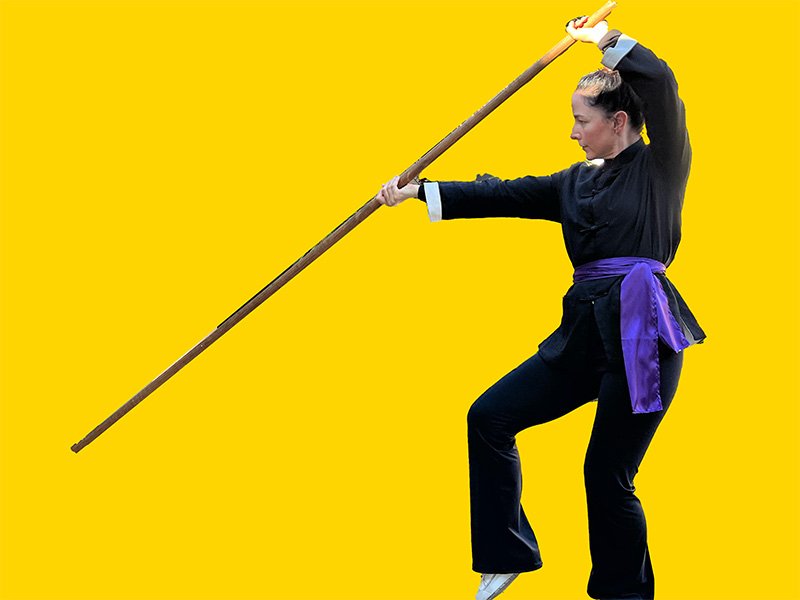
The Six-and-a-Half Points
The six full techniques cover thrusting along the centreline, deflecting incoming attacks, sweeping to disrupt the opponent's base, circling to control and redirect, lifting to create openings, and pressing to immobilise. Each represents a principle of engagement at long range and develops a distinct martial quality. The half-point — the retraction — is an active technique, not a passive withdrawal.
What Serious Practitioners Know About Pole Training
Among Wing Chun practitioners who train the Dragon Pole seriously, the consistent observation is that it makes their empty-hand work better. The pole forces whole-body power integration in a way that empty-hand training alone does not demand. You cannot use arm strength to thrust an eight-foot pole effectively — force must come from the ground, through a rooted stance, engaging the core. When practitioners return to empty-hand work after pole training, they generate more power with better structure at closer range.
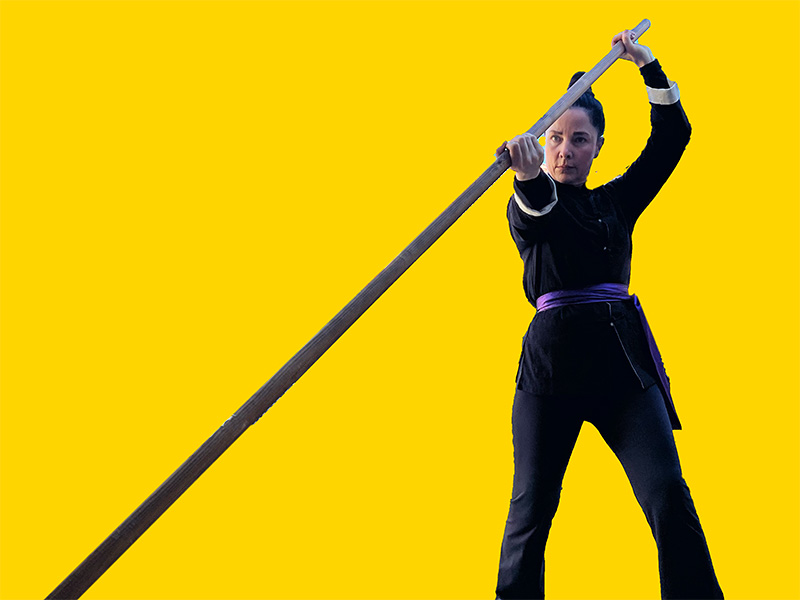
For practitioners ready to train the Dragon Pole with structured expert instruction, Sifu Kendra Mahon's Dragon Pole Master Certification Course covers the complete Luk Dim Boon Gwun form with step-by-step video instruction, examination, and official certification.