
Breaking the Speed Barrier - Why Your Techniques Feel Slow
Every Wing Chun practitioner eventually hits the frustrating plateau where they know the techniques but can't execute them with the speed they see in their instructors or in videos of advanced practitioners. They practice diligently, yet their chain punches remain moderate in tempo, their reflexes in Chi Sau feel delayed, and their sparring movements lack the explosive quality they're seeking. The problem usually isn't lack of practice but misunderstanding what speed actually is and how it's developed.
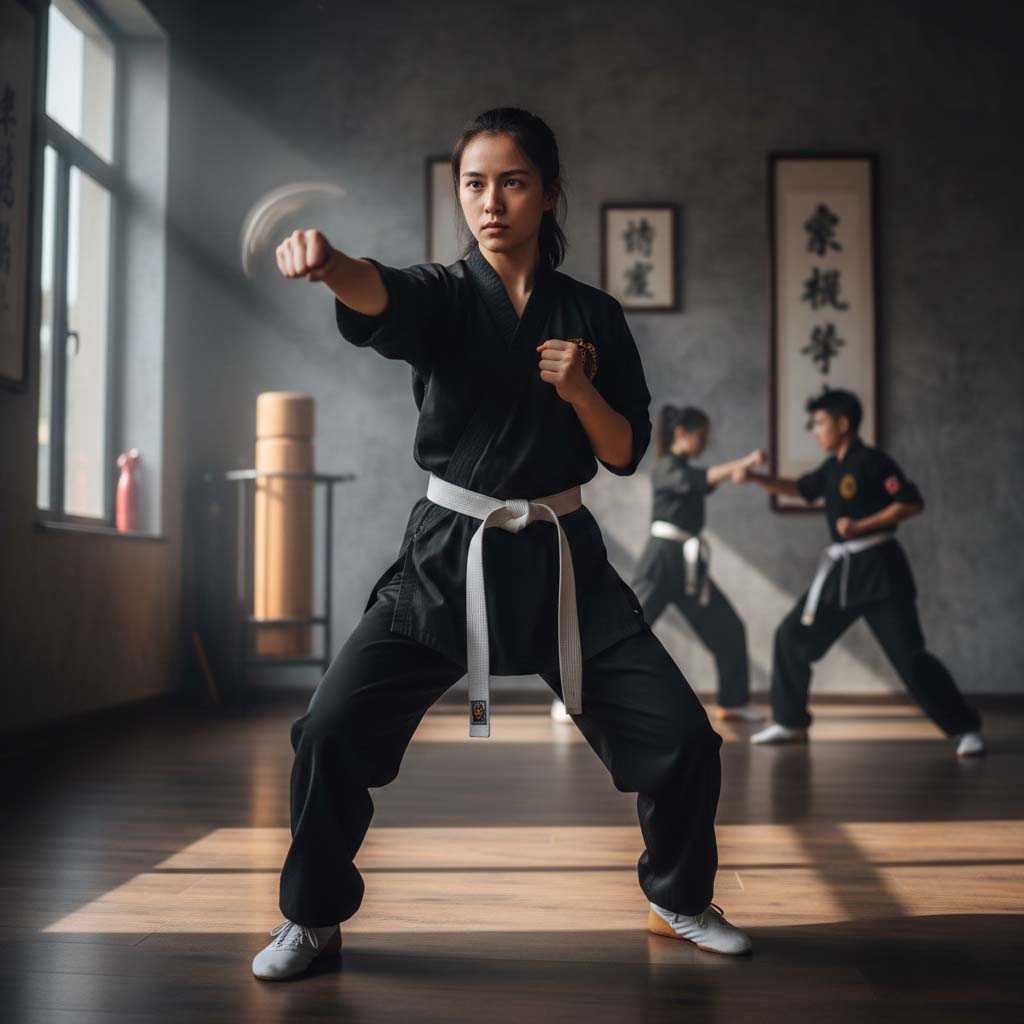
Speed in martial arts isn't primarily about fast-twitch muscle fibers or genetic advantages, though these play minor roles. Real speed is about three factors: eliminating unnecessary movement, reducing cognitive load, and managing tension. Most practitioners who feel slow are actually doing too much, thinking too much, and tensing too much. Fast Wing Chun looks effortless because it is effortless—the removal of everything that hinders natural movement, leaving only what's essential.
Unnecessary movement is the first speed killer. Watch yourself in a mirror or video performing a chain punch. You'll likely notice your shoulders shifting, your elbows flaring, your head moving unnecessarily, or your stance shifting when it should remain stable. Each of these micro-movements burns time and energy. The path to speed begins with subtraction, not addition. Stand in front of a mirror and perform single punches in extreme slow motion, hunting for any extraneous movement and eliminating it. Once clean movement doesn't mean wasteful movement, you've created space to be genuinely fast.
Cognitive load—the mental processing required to execute techniques—is perhaps the most overlooked factor in speed development. If you're consciously thinking "step, turn, punch" during application, you're limited by the speed of conscious thought, which processes at roughly 120 bits per second. Your unconscious mind processes at approximately 11 million bits per second. The difference is staggering. Speed development is really about transferring technique from conscious control to unconscious competence through repetition so perfect it becomes automation.
Tension is speed's greatest enemy because tense muscles contain simultaneously activated agonist and antagonist muscles. When your bicep wants to extend the arm for a punch while the tricep is partially contracted, working against it. This co-contraction is exhausting and slow. True speed emerges from relaxation, where only the necessary muscles activate in sequence. This is why Wing Chun emphasizes "relaxed power." The relaxation isn't about being loose or floppy—it's about the absence of muscular resistance.
Progressive speed training requires a counterintuitive approach: you must move slower to eventually move faster. Begin by performing techniques at perhaps 20% speed with complete attention to eliminating unnecessary movement, reducing mental processing, and maintaining relaxation and precision at the current speed. Most practitioners jump to 70-80% speed immediately, cementing their bad habits and wondering why they can't get faster. The neural pathways you develop during training are what you'll access under pressure. Sloppy fast training creates sloppy fast technique. Clean slow training creates clean technique that can genuinely accelerate.
The role of sensitivity in speed deserves special attention. Many practitioners try to be fast by being twitchy—reacting quickly but without information. Real speed in Wing Chun comes from sophisticated sensitivity that lets you begin your response before your opponent's technique fully manifests. In Chi Sau, this means feeling the incoming pressure and redirecting it before the force peaks. This isn't about quick reflexes but about feeling changes in pressure early enough that your response appears instantaneous. Develop this by slowing down Chi Sau dramatically and focusing on detecting the earliest possible moment you can feel your partner's intention.
Breaking through speed plateaus ultimately requires honest self-assessment and patient, systematic training. Video yourself regularly. Study not just the outcome but the process—are your shoulders tense? Is your breathing held? Are you thinking instead of feeling? Each of these represents an opportunity for improvement. True speed isn't about becoming a different person with different genetics—it's about removing the layers of inefficiency that prevent your natural speed from expressing itself. Every practitioner has the potential for genuine martial speed if they're willing to slow down, strip away the unnecessary, and build their technique on a foundation of efficiency, automation, and relaxation rather than force and effort.