
From the moment he could watch a screen, he was drawn to kung fu films. By the age of seven, he had stopped watching and started training. Forty years later, he is still at it — and the art he found at the end of the road was worth every detour along the way.
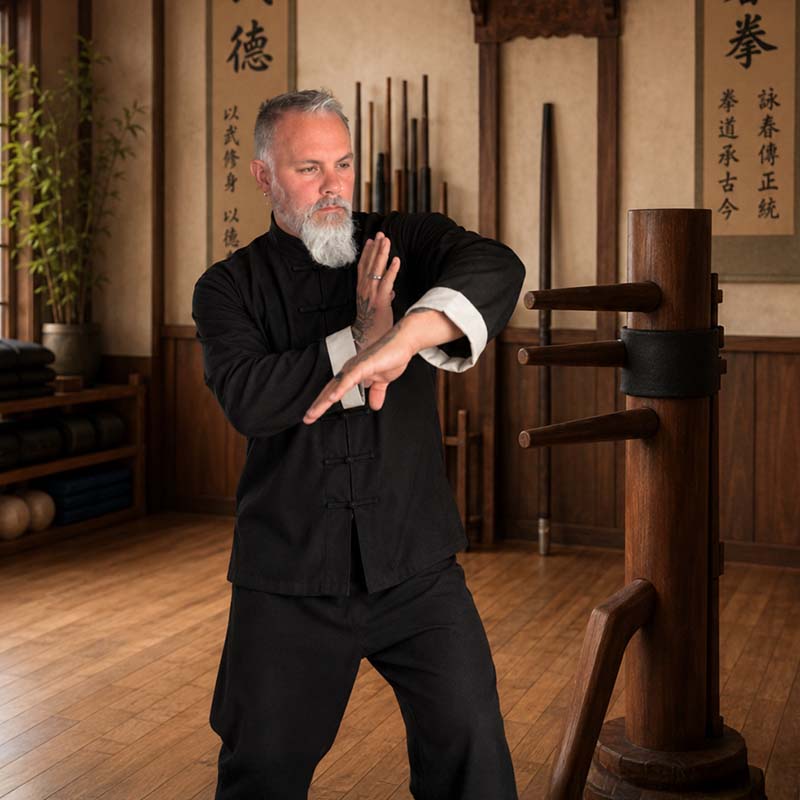
Born on June 27, 1985, in Hildesheim, Lower Saxony, Germany, Benjamin Kahle grew up in a household where martial arts cinema was not background noise — it was a calling. The traditional kung fu films he watched as a child, with their animal styles and fighting philosophies, planted something in him that has never stopped growing. He did not watch those films the way other children watched cartoons. He watched them the way a future practitioner watches his teachers, absorbing the principles beneath the performance, already beginning to understand — even at that age — that the art itself was the point, not the spectacle. By seven years old he had his first answer: judo. It would be the first of many.
Judo was not a phase. Benjamin trained for years, earning his brown belt through the kind of patient, consistent commitment that most people apply to perhaps one thing in their entire lives. He applied it to the mat, and the mat rewarded him. At nineteen, he made a decision that would define the next chapter of his life: he entered law enforcement training. It was there that jiu-jitsu entered his world in earnest — and because his judo foundation was already deep, the transition felt less like learning a new language and more like recognizing a familiar dialect. The same principles of balance, joint control, and leverage. A second brown belt followed. When his career took him to Frankfurt am Main, the demands of professional policing forced a temporary pause in his training — but only temporary. Benjamin quickly understood what most people only realize in hindsight: a life without martial arts was a life missing something essential.
The Dragon Is Named
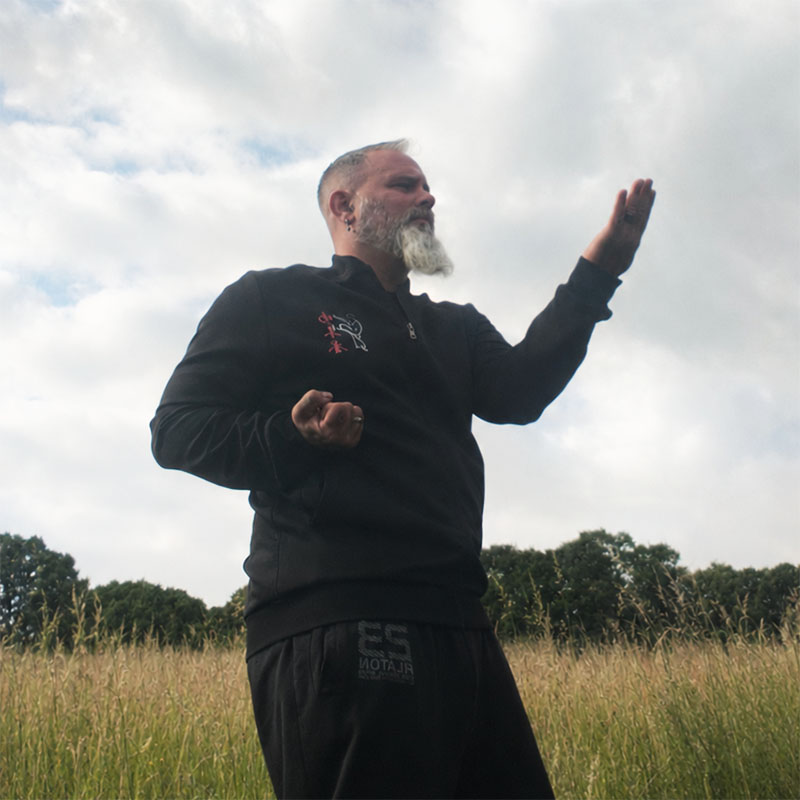
When he returned to training, Benjamin did not go back to what he already knew. He wanted something new — something that existed outside the familiar vocabulary of judo and jiu-jitsu. Through a coworker, he found it. Brazilian capoeira — a martial art that moves like music, that fights like a conversation, that carries within it the history and resistance of an entire culture. Under Mestre Pitbull (Marcos Almeida Brandão) of Grupo Jacobina Arte, Benjamin threw himself into capoeira with the same ferocious dedication he had always brought to the training floor. Over four years, he developed technically and personally, becoming an active member of a community that does not give its honors lightly. In the capoeira tradition, practitioners earn an apelido — a fighting name that captures something true about who they are in the roda. Benjamin was named Dragão. Dragon. It was not decorative. It reflected the way he moved, the way he committed, the way he fought — fluid, powerful, and completely in earnest. He would carry that name with him out of every roda he ever entered, into every art he pursued after.
But the dragon was searching. Capoeira is extraordinary — visually stunning, athletically demanding, rich with philosophy and history. Yet Benjamin was a police officer operating in a world where situations escalated without music and did not resolve in a circle. He needed something that worked in the hallway, in the stairwell, in the moment where there is no roda and no room for performance. Capoeira had given him a name and four years of extraordinary development. It would always be part of him. But the dragon needed a different kind of weapon.
The System That Could Not Be Ignored
It happened the way every important discovery happens — by chance, or by the magnetic pull of a practitioner who has been serious long enough to put themselves in the path of the thing they are looking for. In the Rhine-Main region, Benjamin came across a school of the European WingTsun Organization. He had not known the EWTO. He had not known Leung Ting's Wing Tsun. The films he had grown up with were full of Shaolin animal styles and Drunken Boxing — the spectacular, acrobatic forms that thrill cinema audiences. Wing Chun, in its true form, rarely made it to screen. It is not a system built for cameras. It is a system built for reality. Only in Bruce Lee's movements could a careful eye detect its influence. Benjamin walked into the EWTO school and encountered the first form — Siu Nim Tao. And something clicked that has never come unclicked.
Seven Years Under the Grandmasters
What followed were seven years of intensive Wing Tsun training within the EWTO — courses, seminars, advanced sessions, and the daily private practice of a man who had finally found his system. During those years, Benjamin had the privilege of training under figures of genuine significance in Wing Tsun's modern history: Grandmaster Keith R. Kernspecht, the visionary founder of the EWTO whose passing in November 2024 marked the end of an era; Grandmaster Oliver König; and Grandmaster Giuseppe Schembri. These were not incidental encounters. They were the encounters that happen when a student is ready — when years of preparation make a person capable of receiving what a grandmaster has to offer. Benjamin was ready. He had been preparing for exactly this since he was seven years old.
And then, for the second time in his life, Benjamin Kahle was forced to step away. Professional demands and health challenges made continued active training impossible. The break was longer than the first — significantly longer — and from the outside it might have looked like an ending. It was not. During those years away from the training floor, Benjamin went deeper than most practitioners go in a lifetime of active training. He read — voraciously and without pause — books on Wing Tsun and Wing Chun, on traditional and modern martial arts from around the world, on philosophy, on the psychology of conflict, on the question that had always fascinated him: why do people fight? What happens in the mind before and during a violent encounter? He was building something during those quiet years. He just could not train it yet.
The Fire That Would Not Go Out
During those years of theoretical study, something else happened: Benjamin came across film productions in which Wing Chun played a central role, and saw his art through new eyes. The more deeply he engaged with Wing Chun's principles, history, and philosophy, the clearer it became that the time away had not diminished his passion — it had focused it, sharpened it, transformed it into something more precise and more committed than anything he had felt before. He did not want to return to martial arts. He wanted to return to Wing Chun specifically. The instinct that had drawn him to kung fu films as a child, that had led him through judo, jiu-jitsu, capoeira, and Wing Tsun, had never been satisfied by anything short of the real thing — and it was telling him he had not found the deepest version of the real thing yet.
SiFu Kendra Mahon and the Global Kung Fu Alliance
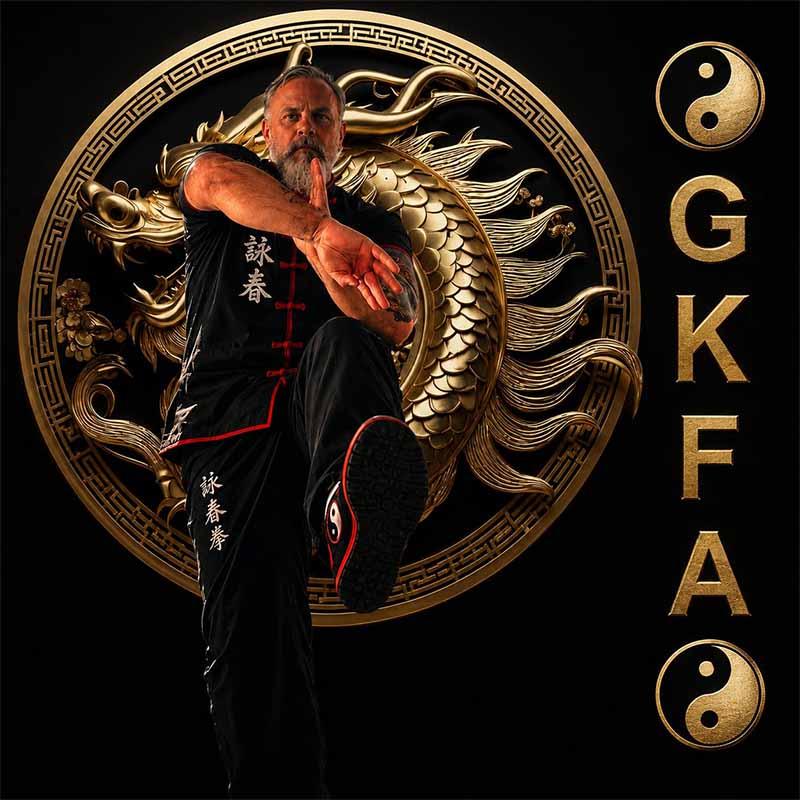
When the opportunity arrived, it arrived the way all the best things in Benjamin's martial arts life had arrived — through readiness meeting circumstance. He became aware of SiFu Kendra Mahon and the Global Kung Fu Alliance, and found in them precisely what his decades of preparation had equipped him to recognize: the real thing. This new chapter was not a fresh start. It was a culmination. Benjamin brought to SiFu Kendra Mahon's traditional Wing Chun — as transmitted in the Ip Man lineage — the full weight of everything that had come before: judo's sense of structure and humility, jiu-jitsu's understanding of control under professional conditions, capoeira's fluid and multi-directional way of moving through a challenge, Wing Tsun's logic of the straight line and the economy of structure, and years of deep theoretical study in philosophy and conflict psychology. He was not a beginner arriving at Wing Chun for the first time. He was a man arriving at his destination.
The Dragon in Full
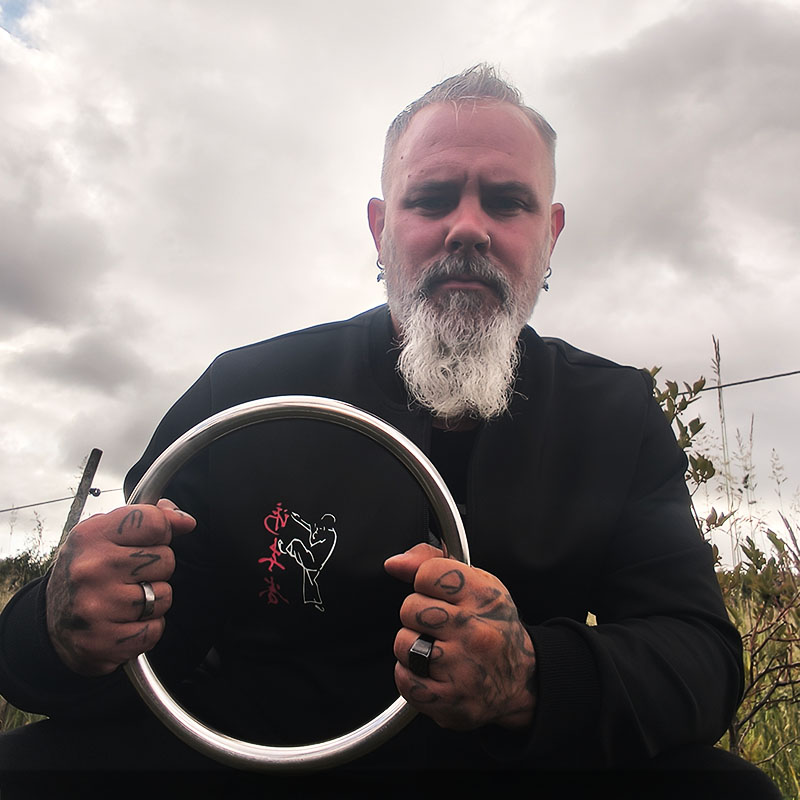
Benjamin Kahle is a police officer in one of Germany's most demanding cities. He is a man who earned two brown belts in two different grappling systems without ever treating either as a credential rather than a commitment. He spent four years as a named practitioner in a capoeira community that does not give names lightly — the dragon of Grupo Jacobina Arte. He trained for seven years under some of the EWTO's most respected grandmasters. He spent years away from the floor and used every one of them to go deeper into the art in his mind. And he arrived, finally, at traditional Wing Chun in the Ip Man lineage — not as someone starting over, but as someone who had been walking toward this his entire life without quite knowing it. The name his capoeira family gave him was Dragão. The dragon. Some names are given as a description of who you are. This one turned out to be a description of what you cannot be stopped from becoming.